www.ExactingEditor.com/Summer-2008.html
Enhancing literary exposure, effectiveness and income
EXACTING RESULTS, July 2008 (Issue #3)
(1) What do Publishers Want? Three more spell it out for us
Sigmund
Freud created a decades-long parlor discussion with the simple query "what do
women want?" I hope someone finally told him that "it depends on which woman --
and, by the way, why don't you try asking her?" Clarity from publishers is
similar: To ask is to be enlightened, and narrowed. And it seems easier to get
workable answers from outfits that are far from
"When we began Addicus Books [in 1994], our focus was on regional true-crime books [and] if we see a good true-crime manuscript come in, we still consider those books for publication. We'd like a synopsis with a clear layout of the story line, how the plot unfolds. Also, give us a sense of the book's structure as well as its scope. Why does this book need to be written?" I know a few people who believe that no true-crime book "needs to be written." But the good news is that Addicus moved beyond its founding niche: "We're seeking titles on: consumer health, self-help, psychology, business, economics, investing..."
Their website is thorough and businesslike. For example, Addicus elaborates on "special markets" this way. When sending in a proposal, "List any special markets your book may have outside regular trade book channels (book stores). Could sales result from your contacts -- associations, organizations, corporations, groups, hospitals, treatment centers, workshops, seminars or speaking engagements? Which magazines or professional/trade journals may review your book or print articles by you which in turn promote the book? Do you have specific ideas for marketing your book? How willing are you to be active in marketing your book?"
In theory, nobody should be able to sell the product like the person who built it. (Let's not argue about whether your book should be seen as a product.) You can view the whole set of Addicus instructions at www.addicusbooks.com/submission_guidelines.cfm
And the firm is diligently planting in the "fields" us aging Boomers will resettle in. Two new offerings are The New Fibromyalgia Remedy and Overcoming Urinary Incontinence: A Woman's Guide to Treatment. One can expect the self-help and "self-health" segments to grow for another 15 years.
(2) What do Publishers Want? This one seeks to push the public debate
In
1985, two idealistic conservative writers took staff jobs in the Reagan White
House. Both of us revered that President, and still do. Unfortunately, he had
installed a chief-of-staff -- Don Regan -- who ran the
I was one of those White House escapees; Richard Vigilante was the other. By early '86, I was back on Capitol Hill and "Rich" went to National Review, where he got me into the issue of February 28, 1986. During the second half of the 1990s, we did non-overlapping stints with the high-flying technology investor George Gilder. Rich was smart enough to take a salary, while I made do, or call it doodoo, with stock advisories.
Not having swapped messages with Rich since then, I recently learned of his journey from conservative writer to activist publisher. Friendly warning: No liberal should approach the Vigilante website without a keg of Pepto-Bismol. Just remember: We are surveying these publishers for clarity of process, more than politics.
"A few rules for authors we don't know" greet the writer checking out Richard Vigilante Books (RVB): Two of them are "Do not send an unsolicited manuscript. It will be destroyed unopened" and "Absolutely, positively never email us an unsolicited manuscript or any other large unsolicited attachment. If you do, not only will we never, ever publish anything by you, we will send Carmine to express our displeasure personally." That's the bluntly humorous Rich I remember. See the whole "how to" at www.richardvigilantebooks.com/unknown-authors.php
These are early days. "RVB" has published just two titles. Yet Rich is no newcomer to this industry. He carried out some bold projects for Regnery Books. And he adopts the brilliant tactic of showcasing books he wishes he had published. Point is, Rich knows what he wants. He wants to move the political needle: "At RVB, our goal is still the bestseller lists. But these days we are less interested in exposing the scandalous behavior of wayward politicos and more interested in challenging the wayward ideas that pass for conventional wisdom."
Repeating that mission even more tightly, it boils down to: "WANTED: Intelligent, controversial non-fiction to push the public debate" -- see www.richardvigilantebooks.com/wanted.php
(3) Quill Driver Books: "We do not publish poetry, children's books, or fiction"
A publishing house explaining what it wants to see from us is one thing. But how many have someone inside the firm who actually wrote a book on how to craft the proposal? Stephen Blake Mettee works at Quill Driver Books and their website closes that loop: "We suggest you read...The Fast Track Course on How to Write a Nonfiction Book Proposal by Stephen Blake Mettee [and follow his] instructions in preparing your book proposal. While this isn't absolutely necessary, a properly prepared book proposal will increase your chances with us as well as with other publishers. It will also help you think your project through completely."
This is sort of like walking into a restaurant and being handed a cookbook instead of a menu. Of course the question for writers usually comes down to: How hungry are you?
Along with Berrett-Koehler Publishers, featured in an earlier issue and mentioned again below, the Quill Driver site is tops for enabling the would-be author to not waste time or chase down rabbit holes. "We publish nonfiction books only and, if you have one that has a large, identifiable and reachable audience, we'd like to hear from you. We do not publish poetry, children's books, or fiction. We prefer to receive a query letter along with a book proposal. Please submit to us by snail mail..." Their proposal guidelines are precise -- www.quilldriverbooks.com/qdb_guidelines.htm
Titles
that grabbed my attention: Sue Fugalde Lick's Freelancing
for Newspapers and The Author's Guide to Building an Online
Platform by Stephanie Chandler. Also notable is Remembering Cesar: The
Legacy of Cesar Chavez, "compiled by Ann McGregor and edited by Cindy
Wathen [and] the first book to be endorsed by the Cesar E. Chavez Foundation."
Quill Driver Books is headquartered in
While Addicus is businesslike and Vigilante is "let's rock," Quill Driver is almost friendly: "We consider simultaneous submissions. Naturally, if we are interested, we will contact you; however, if you wish to hear from us in the event we are not interested, please enclose an SASE. Keep in mind that every publisher turns down projects for reasons that have nothing to do with the merit or publishability of the book. Even if we aren't interested, we encourage you to keep trying with other publishers."
Do you have a publisher to recommend to our subscribers? The nonfiction author who enabled me to launch the Profile series in May 2005, Ira Chaleff, had this to say about the San Francisco-based Berrett-Koehler: "Berrett-Koehler is the most author-friendly publisher there is. They are tremendously respectful of their authors and consult them at every stage. They bring you in to meet all their staff -- [it's part of] an 'author's day,' where you help the staff understand what this book is about... You also sit down with their marketing people to help decide which markets you want to reach... They even consult you on typeface, cover design -- everything... And, to this day, Berrett-Koehler creates a community of authors -- it's extraordinary." Front page -- http://www.bkconnection.com
Like Addicus Books in
(4) Conservation "needs to offer people an alluring vision of what life could be"
Aldo Leopold was one of our most accomplished 20th-century ecologists, and he's the subject of Aldo Leopold's Odyssey, the first book by Julianne Lutz Newton. The latest ExactingEditor.com Q&A also tracks her own "odyssey" as a researcher and first-time author. Granted, no one would mistake Frank Gregorsky for an environmentalist. But I love to monitor the evolution of both elite ideas and mass movements -- and this Q&A with Julianne does double-duty on that front. A sidebar explains Leopold's unique and durable take on land health. We also discuss how "ecology" differs from "environment" and "environmentalism," plus make forays into "carrying capacity" and "sustainability."
In
a 2005 paper,
Julianne
Lutz Newton is president of the John Burroughs Institute at Woodchuck Lodge in
www.ExactingEditor.com/JLNewton-Leopold.html
(5) Kathie Durbin's Q&A as a model, and "Wiki" as info traffic cop
 It
didn't get enough attention last Fall, and I'm looking for a way to add it to a
www.Wikipedia.org display. More about the latter tactic in a minute.
It
didn't get enough attention last Fall, and I'm looking for a way to add it to a
www.Wikipedia.org display. More about the latter tactic in a minute.
The document deserving more attention is the Kathie Durbin Q&A, which is the closest thing yet to what I mean an Author Profile to be. From the founding idea, to the push for sponsorship (which can take various forms), to the sift and sort of themes and personalities, to the budgeting and marketing, to repackaging under pressure, to 200 people showing up for the reading -- the "life course" of a book is its own slow-motion psychodrama. And, from the first talk with a backer on a boat in an Alaskan harbor, Tongass author Durbin conveys this palpably pulpy process superbly -- www.ExactingEditor.com/KathieDurbin.html
As for the Wikipedia? A previous newsletter told of inserting links to five of my Author Profiles (Drucker, Kessler, Ries, Williams and Worster) at the appropriate places in that sprawling "web encyclopedia." Three months after creating those links, visits to the Drucker, Ries and Williams transcripts are much more numerous. To my knowledge, those Q&As are not linked to anywhere else, which makes wiki insertion a good test. No luck on Don Worster, even though someone has started a wiki page for him. Other highly viewed Profiles, based on "webalizer" data from my web-hosting firm, are Kessler and Hall (because they've been highly cooperative in cross-marketing) and Dr. Ferenc Szasz, whose Q&A is linked to by the University of New Mexico -- in other words, his students "have" to check it out!
Bottom line: To benefit from its ever growing traffic flow and list of topics, you don't need to build a new Wiki "entry" from scratch. Just find a couple of topics you have credibility in, and insert a link to one of your website commentaries or other on-line articles. Linking to your amazon.com page, though, would be going too far, judging from the non-commercial character of the Wikipedia culture.
(6) Tall Grabs from Amazon -- too big for its digital britches?
Speaking of the top e-tailer: In the New York Times on June 16, Doreen Carvajal explained how www.amazon.com has taken on Wal-Martian tendencies -- in this case, stiff-arming an adjacent industry group to increase its own profit margin.
"Publishers
traditionally sell books to retailers at a discount off the recommended retail
price," but Carvajal reports that Amazon is "demanding more than its
existing 50%" from certain big houses in
www.nytimes.com/2008/06/16/business/media/16amazon.html
Sounds like an opportunity for Books-A-Million -- which for my money has the clearest website -- or Barnes & Noble. Amazon sells so many categories of goods nowadays I don't even think of it as a bookstore.
(7) Striking mix of scientific exploration and family memoir
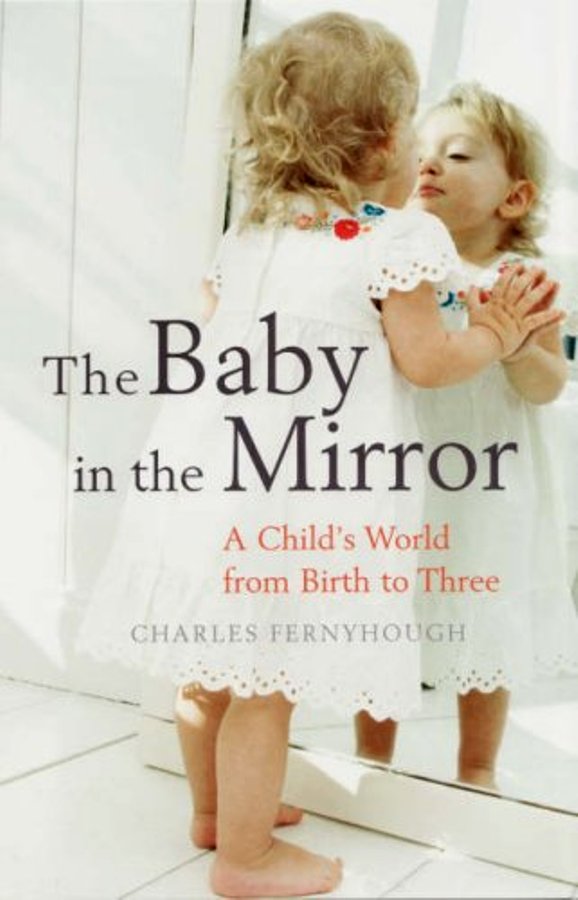 "The
earliest years of our lives remain the most hidden," observes reviewer Andrew
Miller. "Common sense suggests that much of our destiny is shaped in that
little span of time -- our future happiness, future health, the likely success
or otherwise of our relationships. Babies tell us what they can, but it is
often like receiving radio signals from a remote galaxy. Even after the onset
of speech, their language is a currency not quite like our own..."
"The
earliest years of our lives remain the most hidden," observes reviewer Andrew
Miller. "Common sense suggests that much of our destiny is shaped in that
little span of time -- our future happiness, future health, the likely success
or otherwise of our relationships. Babies tell us what they can, but it is
often like receiving radio signals from a remote galaxy. Even after the onset
of speech, their language is a currency not quite like our own..."
The
book he's reviewing won't be out until October. Full title is The Baby in
the Mirror: A Child's World from Birth to Three (Granta Books, 288 pages,
ISBN #1847080073). Its author, Charles Fernyhough, "is a young star of
the developmental psychology world at
www.ft.com/cms/s/0/e35aa9b6-292c-11dd-96ce-000077b07658.html -- might require registration
As a rule, hybrids and "crossover" books confuse audiences. Let's see how Fernyhough fares -- and wish him the best.
(8) The Spam-filter as Frankenstein? "All the time at companies everywhere"
"Next time someone starts telling you about how smart computers have become, remind them about this situation, will you?" That's how Lee Gomes (Go-mez) ended his "Portals" column for the Wall Street Journal on June 18. He was talking about corporate-wide spam filters that function like "a police department that, in an effort to curb juvenile delinquency, [is] hauling in all teenagers without 'A' averages... The antispam system [in our company] labeled as spam just about everything that was even remotely suspect."
Those of us who don't have corporate IT systems to navigate know that AOL and other ISP software suites allow each user to set the degree of severity of the filter -- high, medium, low, or no. But even that's not good enough for the self-employed. (I created two mail-drop e-boxes on my front-page displays with no filters at all; it takes at least a year for web-crawling software to start depositing trash in them, at which point the e-box names can be changed -- a handy feature from AOL.) In approaching authors to propose a Q&A, I now back up e-mail with a phone call, fax memo, or traditional letter.
Gomes persuaded the IT department at Dow Jones to let him and some other reporter-commentators see what was being relegated to the spam can. "Alas, of the 150 readers to write about a recent column, 20% were sent to the spam bucket and would never have been seen by me if I hadn't bothered to ask to take a look. Other reporters who had taken advantage of the more-open access policy had similar tales. One colleague said his spam bucket contained a note from a friend he had assumed was angry with him because he hadn't written. Another found a crucial message from the company's official health-care provider announcing an important change in a health plan. Spam researchers say this sort of thing is happening all the time at companies everywhere."
www.gtisc.gatech.edu/pdf/Real%20Message_WSJ_061808.pdf
That link takes you to a workable PDF file; this is the "real" URL, but it only works for subscribers -- http://online.wsj.com/article/SB121373025951981841.html
One
aspect of spam hyper-filters in large institutions was left out by Gomes. It's
the fact that dodgy operatives, at any level, now have an all-purpose excuse
for why they didn't answer the last two e-mails from the check-expecting
vendor, the job-seeker who used to be friend, or the fellow in the branch
office in
From brainstorming to negotiation, foundational business is best conducted over lunch, on the phone, or via the U.S. Mail. (It's hard for me to enjoy conducting an interview unless you are right there.) E-mail makes its real contribution in the realms of juggling schedules; editorial alerts; managing investments; and with ongoing collaborations that expand research and the text mound, plus come with a deadline or shared goal.
My deadlines are in okay shape, and I hope yours are too. See you in September.
-- Frank Gregorsky, ExactingEditor.com, July 2008
DISCLAIMERS and REMINDERS
EXACTING RESULTS is a survey of recent web literature and platforms, including websites that deal with how to get published. The audience for this newsletter is nonfiction researchers, writers and editors.
Recipients are sent a set of URLs, each one preceded by a context-setter. The purpose of the URLs is to help you enhance literary effectiveness, exposure, and income. To subscribe is free; and e-mail addresses are not swapped, shared or sold. Since most of the people on the founding listserv are self-employed, the newsletter covers marketing and self-management in addition to classic "writer" topics. To stop receiving EXACTING RESULTS, just send that instruction to ExactingResults-unsubscribe@yahoogroups.com.
To introduce your friends to this publication via the "user's guide," the best way is to show them www.ExactingEditor.com/Newsletter.html.